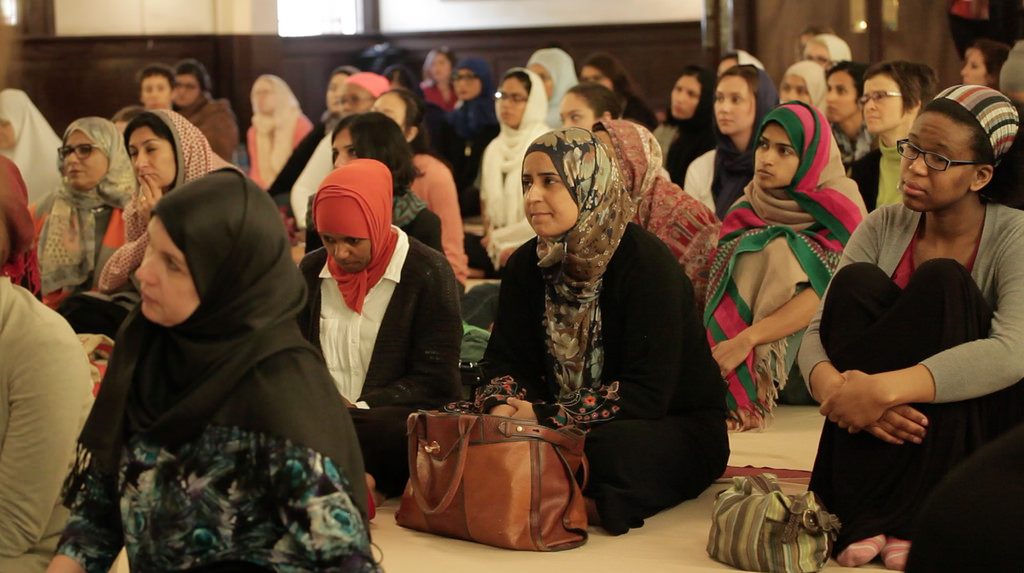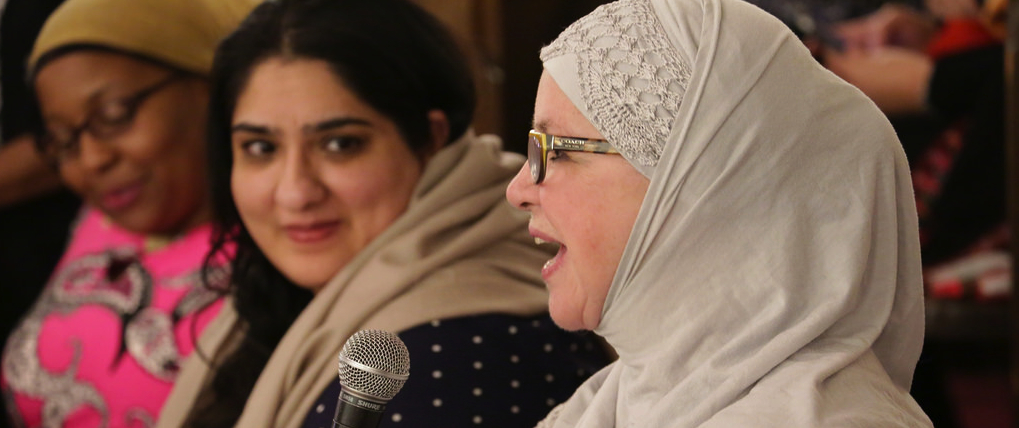
At the Women’s Mosque of America, we affirm and respect the diversity of opinion within Islam and understand this plurality as a sign of God’s mercy. Our approach is rooted in honoring difference while cultivating shared spiritual space and mutual respect.
The WMA serves as an inclusive middle-ground space welcoming Muslims of all sects, backgrounds, schools of thought, and levels of religious practice. Interfaith guests from all religious traditions are welcomed as observers and participants in community learning and reflection.
Our guiding ethos has been a “come as you are” approach, meaning attendees are encouraged to arrive dressed as they normally would outside of a mosque, fostering accessibility and ease for all.
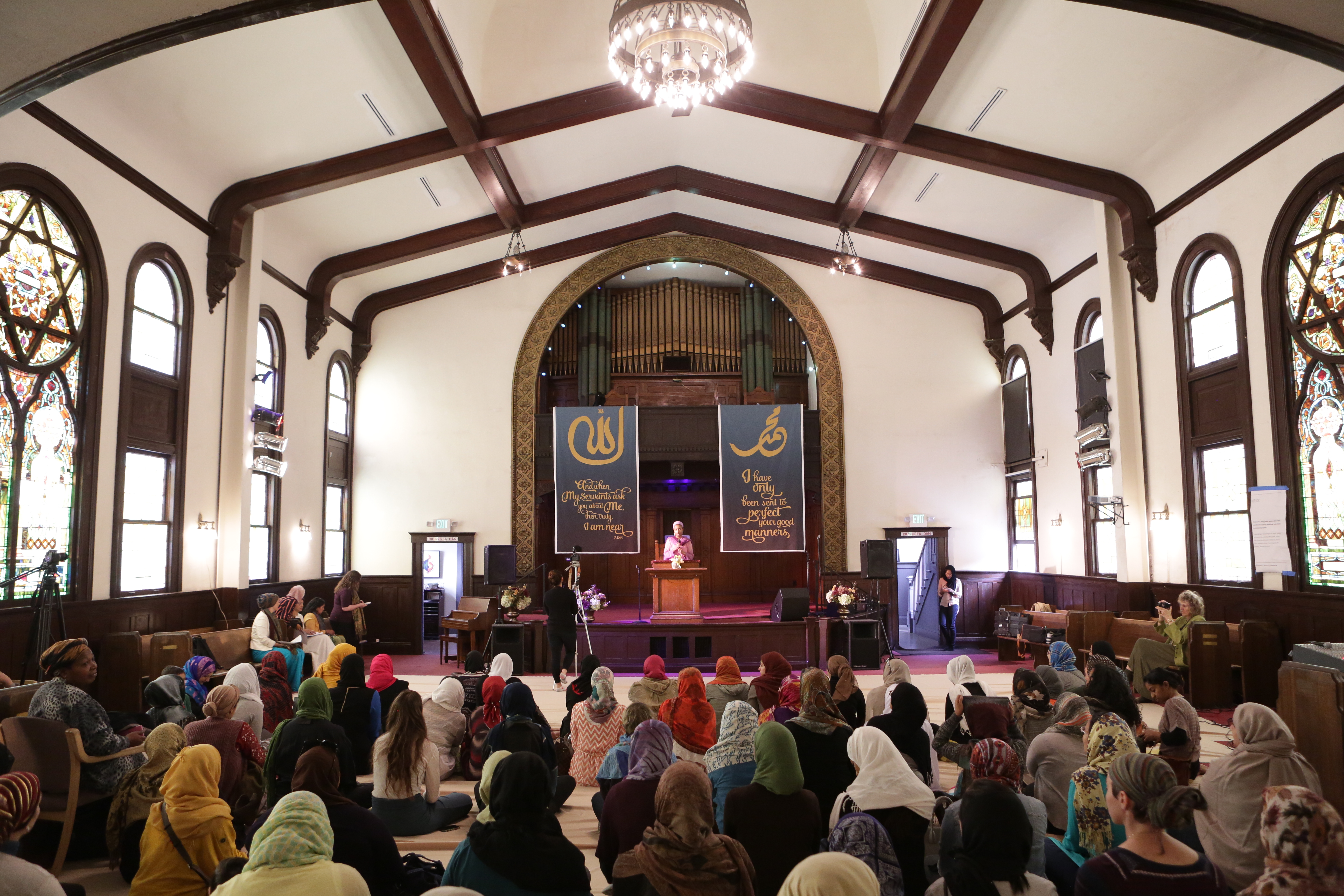
Women-led Friday Jumu’ah prayer services at the Women’s Mosque of America are structured as follows:
- Adhan (call to prayer)
- Khutbah (sermon) delivered by the khateebah (one who delivers the khutbah)**
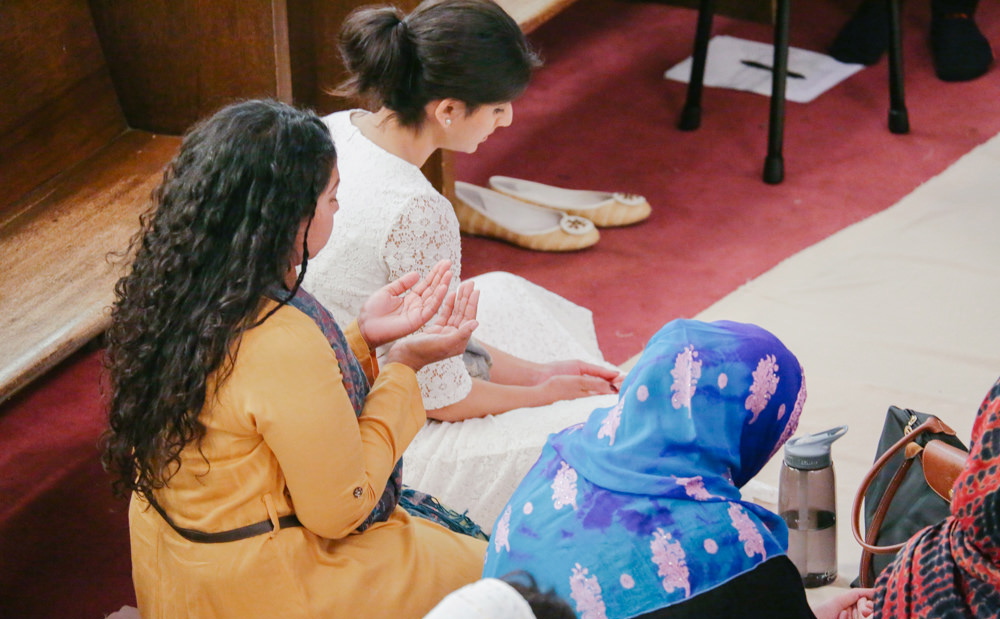
- Congregational two-rak‘ah Jumu’ah prayer
- Optional congregational four-rak‘ah Dhuhr prayer following Jumu’ah
The optional Dhuhr prayer is offered to honor differing scholarly opinions regarding congregational prayer and to ensure that all congregants feel comfortable, respected, and spiritually accommodated.
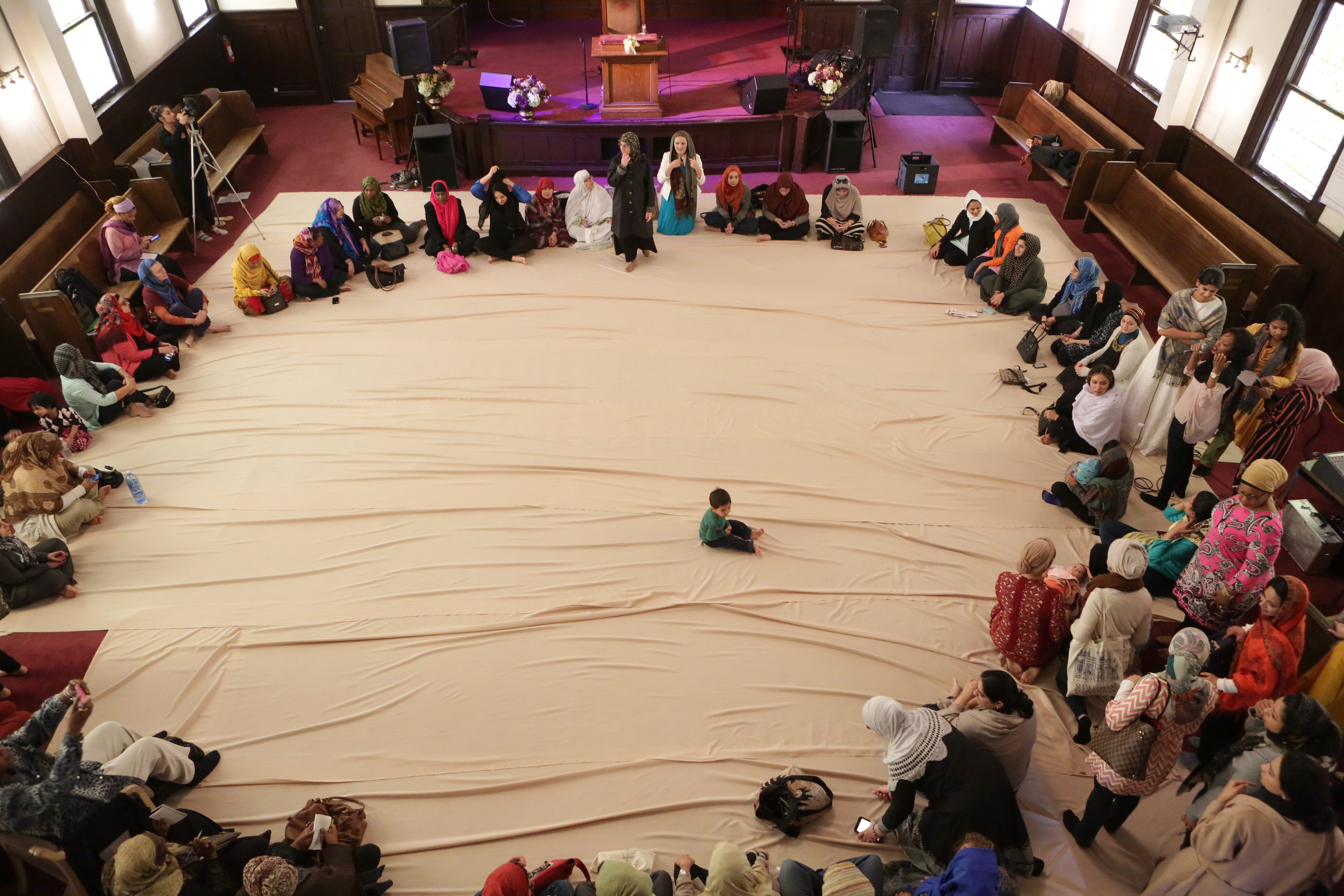
Services are concluded with a facilitated Q&A discussion circle with the imam/khateebah, followed by time for tea and informal community connection.
* To support inclusivity in ritual practice, the Women’s Mosque of America has provided rose petals and clay turbahs for Shi‘a congregants during prayer.
** On occasion, a pre-khutbah bayan (talk) is included at the request of the khateebah. This format reflects practices within the Hanafi school of thought.