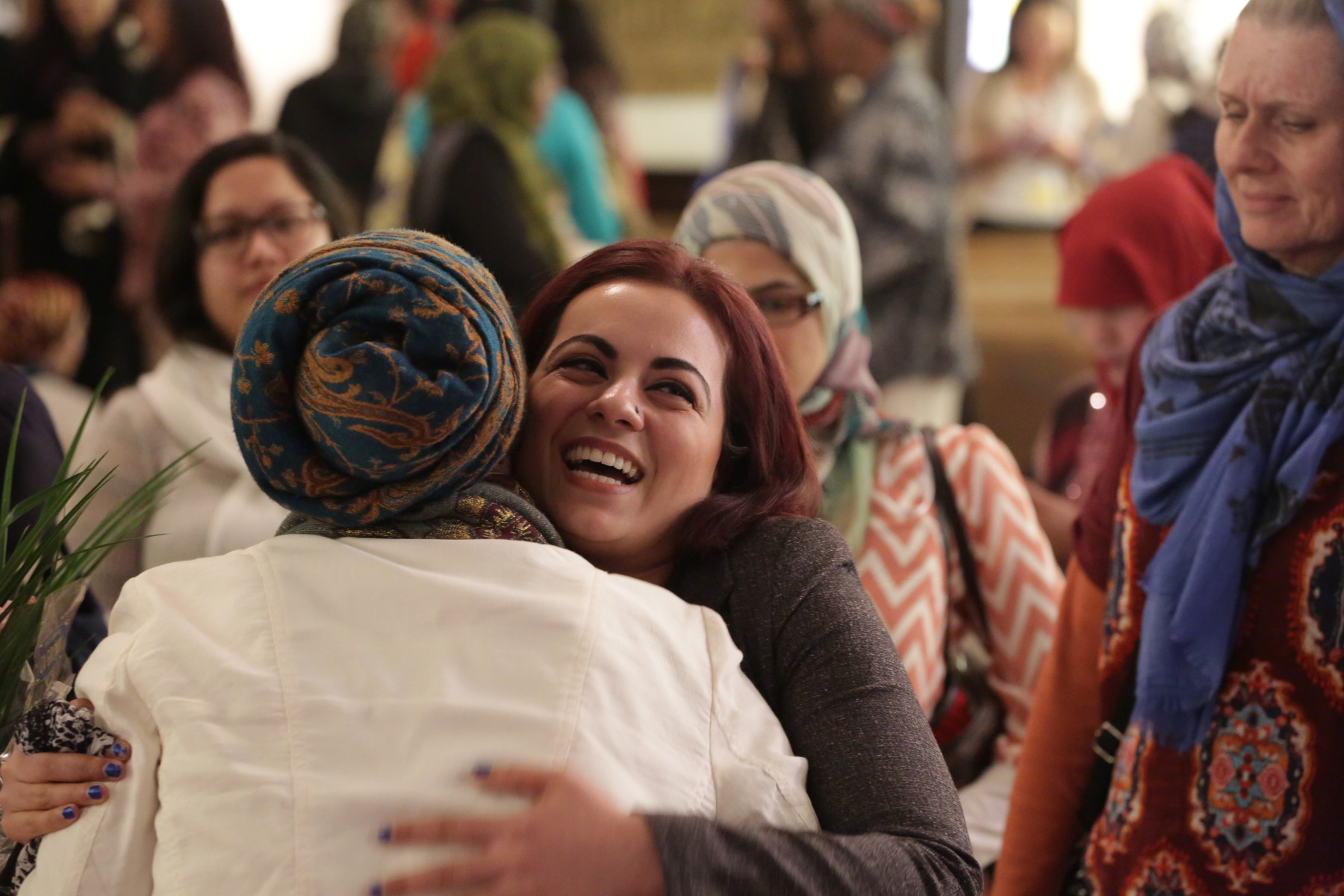
What is the Women’s Mosque of America?
The Women’s Mosque of America (WMA) is the nation’s first women-led Muslim house of worship. Founded as a volunteer-run nonprofit organization, WMA was created to uplift the Muslim community by expanding access for Muslim women and girls to Islamic scholarship, religious leadership, and meaningful participation in communal religious life.
WMA has provided a space where women feel welcomed, respected, and actively engaged within the Muslim Ummah (community). Its work has complemented existing mosques by offering opportunities for women to grow, learn, and gain inspiration that they carry back into their families, communities, and local mosques.
Historically, the Women’s Mosque of America has hosted monthly women-led Friday jumma’a prayer services for women and children (including boys 12 and under), as well as women-led programming, events, and classes open to people of all genders that center female Muslim scholars and women’s perspectives on Islamic knowledge and spirituality.
Since its first jumma’a in January 2015, WMA has supported the training of more than 250 Muslim women to deliver a khutbah (sermon), recite the adhan (call to prayer), lead prayer, or step into mosque leadership for the first time in their lives—alhamdulillah. All praise is due to God alone.
Why was the Women’s Mosque of America created? Why is it important?
The vision for the Women’s Mosque of America grew out of its founder’s lifelong commitment to service, faith, and women’s religious leadership. As an adult, this vision was shaped by learning about the often-overlooked history of Muslim women scholars and religious leaders in the earliest centuries of Islam.
The Women’s Mosque of America was created to help spark and sustain a revival of Muslim women’s religious leadership within the Ummah—as it has existed throughout Islamic history. WMA’s work affirms that uplifting the Muslim community requires harnessing the full potential of the Ummah, including Muslim women, who make up more than half of the community.
Through education, worship, and community engagement, WMA has provided a platform for Muslim women to speak and be heard within recognized frameworks of religious leadership, strengthening the Ummah by expanding access to Islamic knowledge and cultivating women leaders and scholars for the benefit of all.
The Women’s Mosque of America is not only a mosque—it is part of a broader movement toward inclusive and historically grounded Muslim leadership.
Besides jumma’a services, what other activities has WMA offered?
The Women’s Mosque of America has historically organized a wide range of women-led classes, events, and educational programs related to Islamic scholarship, spirituality, community health, and leadership development. This work has emphasized middle-ground pluralism, intra-faith community building, and holistic Qur’an literacy and comprehension.
As WMA continues a period of organizational pause and reflection, information about future activities or offerings will be shared when appropriate.
Are men allowed to participate in women-led prayer services?
No. Women-led prayer services organized by the Women’s Mosque of America have been exclusively for women and children (including boys 12 and under). This structure has been intentional, providing women with a dedicated space to grow, learn, and lead—similar to women’s colleges or women’s gyms.
While men do not participate in these prayer services, they have historically engaged with WMA’s work through public khutbah recordings, educational events, and co-ed programming offered outside the context of jumma’a prayer.
What school of thought does WMA follow?
The Women’s Mosque of America is a non-denominational Muslim space that welcomes individuals from every sect, school of thought, and level of religious practice. WMA has identified as an intra-faith, pluralistic space grounded in mutual respect, intellectual rigor, and spiritual humility.
WMA understands diversity within the Ummah as a sign of God’s mercy and believes that faith is reflected in how community members treat one another. May God guide and protect us all. Ameen.
Is there a dress code?
No. The Women’s Mosque of America has encouraged women to attend in clothing in which they feel comfortable and respected. The emphasis has been on cultivating a supportive spiritual environment rather than policing appearance, centering attention on connection to God and community rather than outward presentation.
Does a women-only mosque divide the community?
No. Much like women’s colleges or women’s gyms, the Women’s Mosque of America has complemented—not competed with—existing mosques and Muslim organizations. Its purpose has been to equip women with knowledge, confidence, and leadership skills that they bring back into their broader communities.
Is this the first women’s mosque in history?
No. Women’s mosques have existed throughout Islamic history, and many continue to operate today, particularly in China, as well as in other parts of the world. These mosques reflect the cultural, political, and historical contexts in which they developed, demonstrating the long-standing presence of women’s religious spaces in Islam.
Will WMA ever allow men in women-led prayer services?
No. Women-led prayer services organized by the Women’s Mosque of America have been, and are intended to remain, exclusively for women and children (including boys 12 and under). Protecting a women-only prayer space is a core element of WMA’s mission.
Who has delivered khutbahs and led prayers at WMA?
The Women’s Mosque of America has invited a rotating roster of women imams and khateebahs, offering diverse perspectives from scholars and community leaders across backgrounds and disciplines. WMA has also supported training opportunities for congregants to learn khutbah delivery and prayer leadership.
Since 2015, more than 150 Muslim women have delivered khutbahs, recited the adhan, led prayer, or stepped into mosque leadership through WMA’s programming—alhamdulillah.
How have men engaged with WMA’s work?
Men have historically engaged with WMA’s mission through public educational programming, co-ed events, and access to recorded khutbahs and lectures. These opportunities have aligned with Islamic tradition by allowing learning from women scholars outside the context of women-only prayer services.
Who is behind the Women’s Mosque of America?
The Women’s Mosque of America has been supported by a diverse network of volunteers, educators, scholars, and community members across the country. Their collective care and labor have made WMA’s work possible over the years.
Why was the first jumma’a held in a multi-faith space?
Launching the first jumma’a in a multi-faith religious center honored Islam’s long history of interfaith coexistence and cooperation. It also reflected WMA’s intention not to compete with existing mosques, as services were held monthly rather than weekly.
A multi-faith space was chosen to provide Muslim women with a dignified, beautiful, and spiritually affirming environment during WMA’s early formation.
Is WMA progressive or conservative?
Neither. The Women’s Mosque of America has described itself as a pluralistic middle-ground space that respects Islamic orthodoxy while recognizing the need for thoughtful engagement with women’s scholarship and fiqh within that framework.
Where has WMA historically received financial support?
The Women’s Mosque of America has operated as a grassroots, volunteer-run nonprofit supported by community care and engagement. As the organization continues a period of organizational pause, financial solicitation is not currently active.
How can people support the mission today?
At this time, the most meaningful ways to support the Women’s Mosque of America are through continued connection, prayer, and respectful engagement with its legacy and educational resources. Updates about future opportunities for involvement will be shared when appropriate.
We are deeply grateful for the community’s du‘a, care, and trust. May God bless and protect the Women’s Mosque of America, and may our collective efforts continue to uplift the Ummah through faith, knowledge, and integrity. Ameen.